Students learn how to use a camera, computer, film and darkroom to create images by using their own ideas and by researching the work of great photographers.

Students learn how to use a camera, computer, film and darkroom to create images by using their own ideas and by researching the work of great photographers.
‘Photography has little to do with the things you see and everything to do with the way you see them.’ Elliott Erwitt
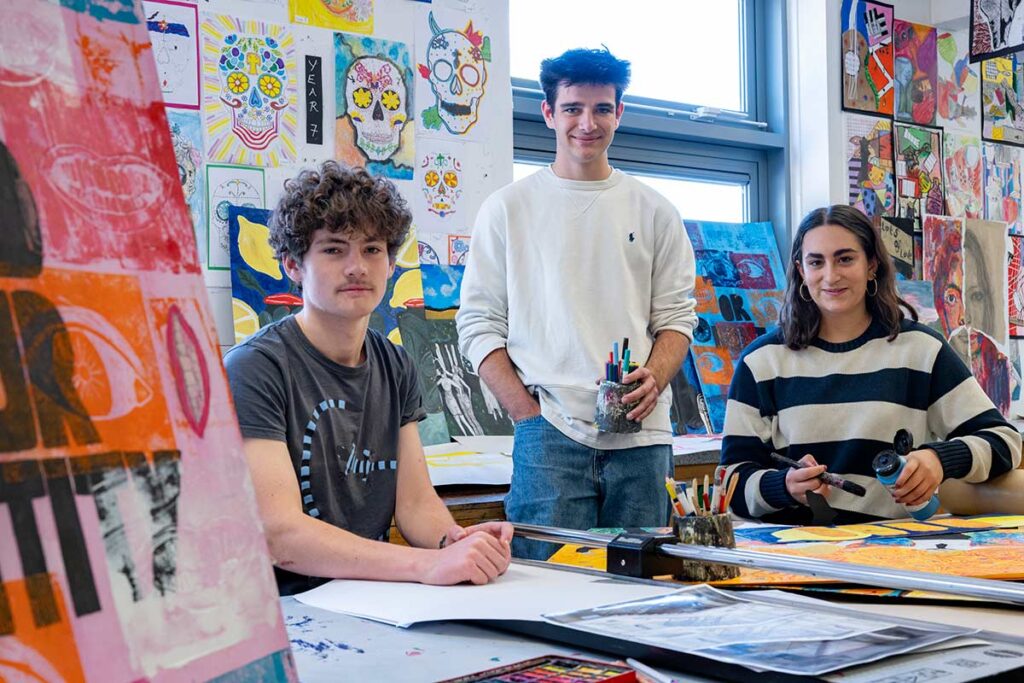
At Thomas Mills High School and Sixth Form we teach Pearson Edexcel A Level Art and Design. The course encourages students to develop as independent, reflective and creative practitioners who can investigate ideas, experiment with media, refine their intentions and produce personal, meaningful outcomes. Students learn to respond to photographers, artists, and wider visual culture, using practical and critical enquiry to develop confidence, technical skill and visual understanding. Through sustained project work, students build the ability to record observations, analyse sources, take creative risks and communicate ideas with purpose and originality.
The Thomas Mills High School & Sixth Form A Level Photography curriculum aims to teach pupils the skills and understanding of digital and darkroom techniques and approaches to analysing photography-based artwork while covering the four Assessment areas below:
Pearson Edexcel state that students should:
Knowledge:
Rules of Composition, portraying movement.
Skills:
Taking images on DSLR camera. Editing and storing images. Printing images. Book presentation. Aperture. Shutter speed. ISO.
Useful Links
https://www.canon.ca/CanonOutsideOfAuto/play
Knowledge:
Photographic portraits and Still Life. Photographers Rankin and Edward Weston.
Skills:
Using ambient light, flash and constant light sources.
Colour and monochrome.
Useful Links
https://www.rankinphoto.co.uk/
https://www.westongallery.com/original-works-by/edward-weston
Knowledge:
Darkroom and digital manipulation techniques.
Skills:
Processing monochrome darkroom materials. Assessing exposure. Dodging and burning.
Using Photoshop to manipulate images.
Useful Links
https://www.lomography.com/school/darkroom-techniques-fc-j5pk3qpa
Knowledge:
Writing about photographs. Analysing own work and that of other photographers. Writing about exhibition visits.
Skills:
Use of technical vocabulary. Discussing images.
Useful Links
Assessments:
Outcomes are assessed at the end of each unit.
Knowledge:
Students choose their own theme linked to contemporary society and explore it through photographs.
Skills:
Independent selection and direction for work. Greater ownership. Make a zine to show present photographs and personal stance on social issue.
Useful Links
Knowledge:
The work of the Bechers, the Dusseldorf School.
Skills:
Presentation of work in grid format. Sequences of images.
Useful Links
https://www.tate.org.uk/art/artists/bernd-becher-and-hilla-becher-718/who-are-bechers
Knowledge:
Photography artists who use collage and multiple image techniques. David Hockney, Hannah Hoch, Zofia Kulik.
Skills:
Cutting and pasting to layer images. Sewing and use of fabric. Overlaying acetates in darkroom printing. Scanography. Layering in Photoshop.
Useful Links
https://blog.scienceandmediamuseum.org.uk/david-hockney-time-lord/
Knowledge:
Understanding the exam board requirements (Assessment Objectives). Choosing a personal theme. Choosing photographs to analyse.
Skills:
Understanding how to develop an investigation and clearly show a creative journey.
Useful Links
Knowledge:
Photographers Alys Tomlinson, Alex Boyd, Ryan McGinley
Skills:
Selecting a location. Working with a model . Linking shoot to overall theme.
Useful Links
Knowledge:
Photographer Gregory Crewdson. Use of tripod and mixed light sources.
Skills:
Creating mood and narrative in a still photo or series of photos.
Knowledge:
Photographer Ansel Adams and others. Comparing colour and monochrome in Landscape photography.
Skills:
Planning, location selection, use of filters, methods of presentation.
Assessments:
Review work on Personal Investigation. Plan and make a mock outcome (In 5 hour concentrated session) that relates to theme of Personal Investigation.
“A photograph is not necessarily a lie, but it isn’t the truth either. It’s more like a fleeting, subjective impression.” — John Berger
At Thomas Mills High School and Sixth Form, students follow AQA A Level Art and Design (Photography). Year 13 completes Component 1: Personal Investigation and then undertakes Component 2: Externally Set Assignment. The course develops independent, reflective and creative practitioners who investigate personal ideas, respond critically to contextual sources, experiment purposefully, refine intentions and present resolved outcomes. Supporting studies, first-hand observation, drawing and written analysis should show a coherent journey through all four Assessment Objectives.
YEAR 13:
Knowledge:
Students establish and sustain a personal line of enquiry informed by first-hand observation and relevant contextual sources. They connect practical investigation with critical understanding and use the Personal Study to articulate ideas, influences and judgements.
Students take part in workshops that enable them to make progress on their Personal Investigation.
Workshops:
Abstract Photography, using digital and traditional media. Further use of artificial lighting. 3-D, multi-media approaches to displaying work. Drafting and refining the Personal Study
Skills and evidence:
Useful Links
Term 1 assessment checkpoint:
Review the developing portfolio and Personal Study against AO1–AO4. Evidence should show a coherent enquiry, purposeful contextual links, experimentation, recording, critical reflection and clear next steps towards a resolved personal response.
Knowledge:
Students consolidate their selected direction, make connections across supporting studies and prepare a personal and meaningful final response. The portfolio and Personal Study should communicate intentions clearly and demonstrate an integrated journey through all four Assessment Objectives.
Skills and evidence:
Useful Links
Component 1 assessment:
Personal Investigation: 60% of the A level. Internally assessed and externally moderated. Includes supporting studies, personal outcome(s) and a related Personal Study. Assess evidence holistically across AO1–AO4.
Knowledge:
From 1 February, students select and interpret a starting point from 8 choices listed in the externally set paper. They undertake a sustained period of preparatory study before completing unaided work during a 15-hour period of sustained focus under examination conditions.
Skills and evidence:
Useful Links
AQA | Resources | Past Papers & AQA Mark Schemes
Component 2 assessment:
Externally Set Assignment: 40% of the A level. The paper is released on 1 February. Preparatory studies support a 15-hour period of sustained focus; the component is internally assessed and externally moderated against AO1–AO4.
Exam Board:
AQA
Course Code:
7206
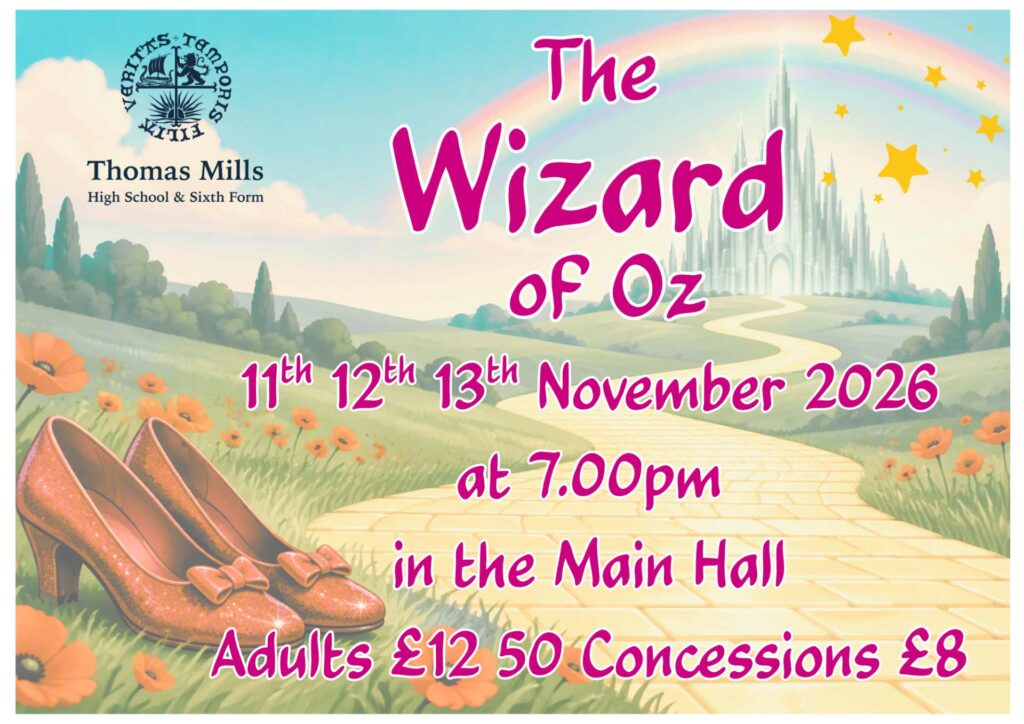
Don’t forget to book your tickets for performances on Wednesday 11th and Thursday 12th November. Friday 13th November is now sold out!