English Literature

Throughout the two-year course, students will study a range of poetry, prose and drama and will have the opportunity to pursue their own literary interests through the non-exam

The English Literature curriculum at Thomas Mills High School Sixth Form aims to develop intellectually curious, independent and perceptive readers who engage critically with a wide range of literary texts. Through the study of challenging works across genres and time periods, students deepen their appreciation of literature as both an artistic form and a reflection of human experience. The curriculum is structured around three key areas of development:

  • Substantive knowledge: knowledge of literary texts, genres, contexts and critical ideas

Students study core components from the AQA English Literature Specification A, including Love Through The Ages (poetry and Shakespeare), Texts in Shared Contexts (post 1945) and independent critical study (NEA). They explore a wide range of texts, including prose, poetry and drama, considering themes, narrative methods, genre conventions and literary traditions. Students develop an understanding of historical, social and cultural contexts, as well as different critical perspectives and interpretations.

  • Ways of knowing: students learn ‘how to know’ about literature

Students are taught to analyse texts in depth, exploring how meaning is created through language, form and structure. They develop sophisticated academic writing skills, constructing coherent arguments and engaging with alternative interpretations. Emphasis is placed on comparative analysis, critical debate and the use of theoretical approaches where appropriate. Students also learn how to undertake independent research, evaluate sources and apply critical viewpoints in their NEA coursework.

  • Personal knowledge: students reflect on their own interpretations and critical voice

Students are encouraged to develop a confident and individual critical voice, articulating personal responses while engaging thoughtfully with diverse perspectives. They reflect on the moral, philosophical and emotional dimensions of literature, considering how texts relate to their own experiences and the wider world. Through discussion, debate and extended writing, students build resilience and independence as learners, becoming reflective and articulate critical thinkers.


Term 1

‘The Great Gatsby’

Knowledge:

  • Understanding of the social, cultural and historical context of 1920s America (including the American Dream, Prohibition, class and wealth disparity).
  • Detailed knowledge of characters, themes (e.g. illusion vs reality, morality, identity), structure and narrative voice.
  • Awareness of literary critical perspectives (e.g. Marxist and feminist interpretations).
  • Introduction to elements of tragedy and the tragic hero within a modern text.

Skills:

  • Developing close analytical reading of prose texts.
  • Constructing clear, conceptual arguments in extended essay writing.
  • Selecting and integrating textual evidence effectively.
  • Beginning to engage with different interpretations and critical viewpoints.
  • Building accurate and appropriate academic writing style.

Useful Links

Teachers and schools events, workshops and resources – British Library

MASSOLIT – Short video lectures from the world’s best academics

Free Homework & Revision for A Level, GCSE, KS3 & KS2

A-Level English Literature Revision – StudyWise

Pre – 1900 Love Poetry

Knowledge:

  • Understanding of a range of pre-1900 poets (e.g. Shakespeare, Donne, Keats, Browning) and their differing representations of love.
  • Awareness of historical and literary contexts (e.g. courtly love, metaphysical poetry, Victorian values).
  • Knowledge of key poetic forms and conventions (sonnets, dramatic monologue, lyric poetry).
  • Exploration of recurring themes such as romantic love, jealousy, power, gender roles, and loss.
  • Understanding of how poetic voice and perspective shape meaning.

Skills:

  • Close analysis of poetic language, imagery, form, and structure.
  • Comparative essay writing across multiple poems.
  • Ability to construct conceptual arguments about love across time periods.
  • Confident use of subject terminology (e.g. volta, iambic pentameter, caesura).
  • Engagement with alternative interpretations and developing a personal critical voice.

Useful Links

LitCharts | From the creators of SparkNotes, something better.

LitWeaving | A-Level English Literature Revision Platform

‘A Streetcar Named Desire’

Knowledge:

  • Study of post-1945 drama, including social and historical context (post-war America, gender roles, class conflict).
  • Understanding of dramatic methods: staging, symbolism, dialogue, and character construction.
  • Exploration of key themes such as desire, power, violence, and identity.
  • Introduction to the AQA “Modern Times” paper requirements and comparative thinking.

Skills:

  • Analysing dramatic techniques and their effects on audiences.
  • Comparing texts through shared themes and ideas.
  • Developing more sophisticated essay structures linking context and interpretation.
  • Applying critical perspectives independently.
  • Improving timed writing and examination technique.

Useful Links

Teachers and schools events, workshops and resources – British Library

MASSOLIT – Short video lectures from the world’s best academics

Free Homework & Revision for A Level, GCSE, KS3 & KS2

A-Level English Literature Revision – StudyWise

Unseen Poetry

Knowledge:

  • Understanding of a wide range of poetic forms, structures and conventions
  • Awareness of how poets use language, imagery and sound to shape meaning
  • Familiarity with common themes such as nature, identity, conflict and relationships
  • Recognition of tone, voice and perspective in poetry

Skills:

  • Close, detailed analysis of unseen poems
  • Identifying how meaning is created through language, form and structure (AO2)
  • Constructing clear, well-supported analytical arguments (AO1)
  • Making connections between two unseen poems (comparison skills)
  • Writing confidently under timed conditions

Useful Links

Teachers and schools events, workshops and resources – British Library

MASSOLIT – Short video lectures from the world’s best academics

Free Homework & Revision for A Level, GCSE, KS3 & KS2

A-Level English Literature Revision – StudyWise

Unseen Prose

Knowledge:

  • Understanding of narrative methods such as point of view, structure and characterisation
  • Awareness of genre conventions across literary prose (e.g. Gothic, dystopian, realist fiction)
  • Knowledge of how setting and context influence meaning

Skills:

  • Analysing unseen extracts with precision and independence
  • Exploring how writers shape meaning through narrative voice and style
  • Selecting and embedding textual evidence effectively
  • Writing structured responses that focus on the writer’s craft
  • Developing comparative thinking where relevant


Assessments:

KEY ASSESSMENT – NOVEMBER. ‘THE GREAT GATSBY’AND LOVE POETRY and UNSEEN POETRY

Other ongoing assessments will include quizzes, research, presentations and essays


Term 2

‘The Great Gatsby’
‘Othello’

Pre – 1900 Love poetry

Unseen Poetry

Unseen Prose

Knowledge:

  • Understanding of Shakespearean tragedy conventions
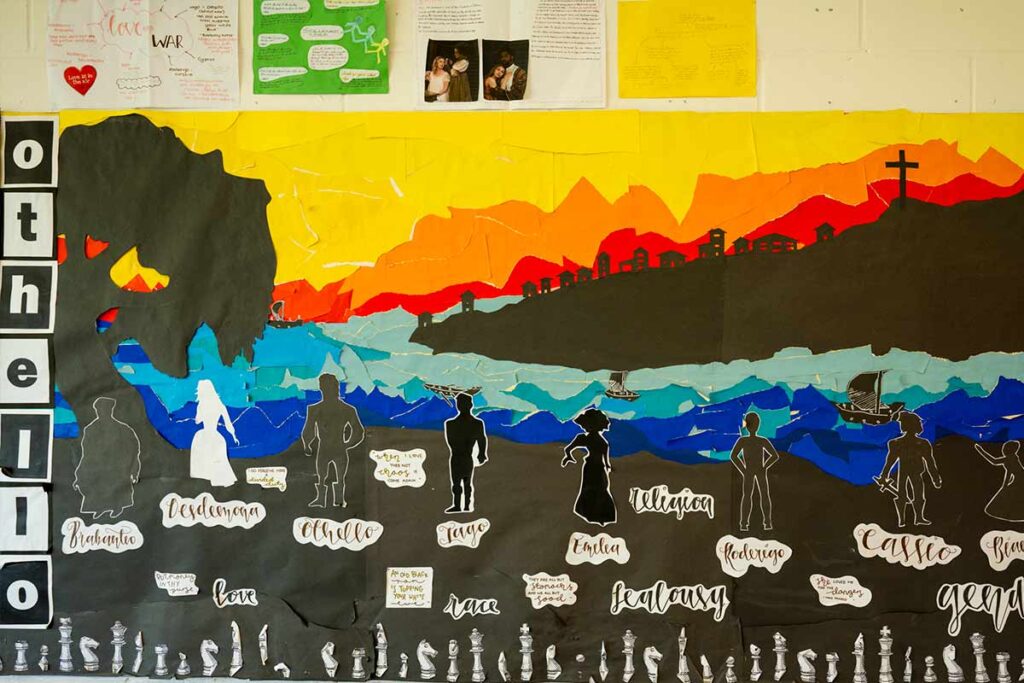
  • Knowledge of key themes: jealousy, power, race, gender, manipulation and trust
  • Awareness of the play’s historical and social context (Jacobean attitudes, race, patriarchy)
  • Familiarity with critical interpretations and debate

Skills:

  • Close analysis of Shakespeare’s language and dramatic methods (AO2)
  • Exploring how meaning changes in performance (AO2/AO5)
  • Applying contextual understanding (AO3)
  • Constructing coherent, conceptual essays (AO1)
  • Engaging with different interpretations and critical viewpoints (AO5)

Useful Links

Teachers and schools events, workshops and resources – British Library

MASSOLIT – Short video lectures from the world’s best academics

Free Homework & Revision for A Level, GCSE, KS3 & KS2

A-Level English Literature Revision – StudyWise

Assessments:

KEY ASSESSMENT – ‘A STREETCAR NAMED DESIRE’ AND UNSEEN PROSE’

Other ongoing assessments will include quizzes, research, presentations and essays


Term 3

‘The Handmaid’s Tale’

Knowledge:

  • Understanding of dystopian genre conventions
  • Exploration of key themes: power, control, gender, religion and resistance
  • Awareness of political and historical influences (e.g. feminism, totalitarianism)
  • Understanding narrative voice and structure

Skills:

  • Analysing Atwood’s use of language, symbolism and narrative perspective
  • Exploring connections between context and meaning (AO3)
  • Developing critical interpretations of characters and themes
  • Making links within and across texts (AO4 where appropriate)
  • Writing detailed, evaluative literary essays

Useful Links

Teachers and schools events, workshops and resources – British Library

MASSOLIT – Short video lectures from the world’s best academics

Free Homework & Revision for A Level, GCSE, KS3 & KS2

A-Level English Literature Revision – StudyWise

‘The Great Gatsby’

Unseen Poetry

Unseen Prose

NEA

‘Othello’

Knowledge:

  • Understanding of NEA requirements (independent comparative study)
  • Knowledge of literary methods across chosen texts
  • Awareness of critical perspectives and interpretations
  • Understanding how to frame an academic argument

Skills:

  • Independent selection and exploration of texts
  • Formulating a clear, focused research question
  • Conducting independent reading and research
  • Developing a sustained, structured comparative argument
  • Applying literary terminology accurately
  • Drafting, editing and refining extended academic writing
  • Referencing sources appropriately and evaluating interpretations (AO5)

Useful Links

Teachers and schools events, workshops and resources – British Library

MASSOLIT – Short video lectures from the world’s best academics

Free Homework & Revision for A Level, GCSE, KS3 & KS2

A-Level English Literature Revision – StudyWise

Assessments:

KEY ASSESSMENT – INTERNAL EXAMS. PAPER 1: ‘OTHELLO AND UNSEEN POETRY, PAPER 2:’THE GREAT GATSBY/LOVE POETRY AND UNSEEN PROSE

Other ongoing assessment will include quizzes, research, presentations and essays


Term 1

‘The Handmaid’s Tale’

Knowledge:

  • Understanding of the novel as a dystopian text, including key genre conventions
  • Exploration of central themes: power, control, patriarchy, religion, identity, resistance and freedom
  • Awareness of the novel’s political and historical influences, including second-wave feminism and totalitarian regimes
  • Understanding of narrative methods, particularly first-person narration, structure and use of memory
  • Knowledge of symbolism (e.g. colour, names, ritual) and how meaning is constructed

Skills:

  • Analysing Atwood’s use of language, symbolism and narrative voice (AO2)
  • Evaluating how context shapes meaning and reader interpretation (AO3)
  • Constructing conceptual, critical essays exploring themes and ideas (AO1)
  • Making links to wider literary ideas such as dystopia and speculative fiction (AO4 where appropriate)
  • Evaluating alternative interpretations and engaging with critical debate (AO5)
  • Writing detailed, developed responses under timed exam conditions

Useful Links

Teachers and schools events, workshops and resources – British Library

MASSOLIT – Short video lectures from the world’s best academics

Free Homework & Revision for A Level, GCSE, KS3 & KS2

A-Level English Literature Revision – StudyWise

‘The Feminine Gospels’ poetry anthology

Knowledge:

  • Understanding of Duffy’s exploration of female identity, experience and perspective in contemporary society
  • Awareness of key themes including gender, transformation, power, relationships and societal expectations
  • Knowledge of poetic form and variation across the collection, including dramatic monologue, narrative poetry and symbolism
  • Understanding of the social and cultural context of late 20th and early 21st century feminism
  • Familiarity with critical viewpoints and interpretations of Duffy as Poet Laureate and feminist voice

Skills:

  • Analysing how Duffy shapes meaning through language, imagery and structure across a collection (AO2)
  • Making connections between poems, identifying patterns and contrasts within the anthology (AO4)
  • Developing conceptual, argument-driven essays about themes and ideas (AO1)
  • Applying contextual understanding of gender and society (AO3)
  • Engaging with different interpretations and forming independent critical viewpoints (AO5)
  • Writing confidently about poetry in both unseen and comparative contexts

Useful Links

Teachers and schools events, workshops and resources – British Library

MASSOLIT – Short video lectures from the world’s best academics

Free Homework & Revision for A Level, GCSE, KS3 & KS2

A-Level English Literature Revision – StudyWise

Assessments:

KEY ASSESSMENT – NOVEMBER. ‘A Streetcar Named Desire’ and ‘The Handmaid’s Tale’
Other ongoing assessments will include quizzes, research, presentations and essays

KEY ASSESSMENT – INTERNAL EXAMS. PAPER 1 – ‘THE GREAT GATSBY’ AND LOVE POETRY AND UNSEEN POETRY, PAPER 2:’A STREETCAR NAMED DESIRE’ AND ‘THE HANDMAID’S TALE’ AND UNSEEN PROSE
Other ongoing assessment will include quizzes, research, presentations and essays



Term 3

Exam Preparation for all texts

Knowledge:

  • Secure knowledge of set texts
    Students develop a detailed understanding of all studied texts, including key events, characters, themes and quotations.
  • Understanding of literary methods
    Knowledge of how writers shape meaning through language, form and structure, including genre conventions (e.g. tragedy, dystopia, poetry collections).
  • Contextual understanding (AO3)
    Awareness of the historical, social and political contexts in which texts were produced and received, and how these influence interpretation.
  • Critical interpretations (AO5)
    Familiarity with a range of critical viewpoints and debates, and how interpretations of texts can differ.
  • Connections across texts (AO4)
    Understanding of links between texts, such as shared themes, ideas or genre features.
  • Assessment structure and demands
    Clear understanding of exam format, including the different types of questions (unseen, extract- based, and essay questions) and how marks are awarded.

Skills:

Students refine a range of advanced skills to ensure they are fully prepared for final examinations:

Analytical Writing (AO1 & AO2)

  • Constructing clear, coherent and conceptual arguments
  • Analysing writers’ methods with precision (language, form and structure)
  • Selecting and integrating relevant textual evidence effectively
  • Writing fluently and accurately under timed conditions

Comparative Skills (AO4)

  • Making thoughtful and developed links between texts
  • Exploring similarities and differences in themes, characters and ideas
  • Structuring comparative essays effectively

Contextual and Critical Evaluation (AO3 & AO5)

  • Applying contextual knowledge to enhance interpretations
  • Evaluating different critical viewpoints and interpretations
  • Developing independent, informed personal responses to texts

Unseen Text Analysis

  • Applying literary knowledge to unfamiliar prose and poetry
  • Identifying key techniques and meanings quickly and confidently
  • Structuring effective responses within time constraints

Exam Technique and Preparation

  • Planning and structuring answers efficiently
  • Writing under timed conditions with increasing confidence
  • Responding directly to the question and maintaining a clear argument
  • Reviewing and improving responses using examiner feedback and mark schemes

Independent Revision Skills

  • Organising revision of multiple texts and themes
  • Creating revision materials (e.g. notes, mind maps, quotation banks)
  • Practising past paper questions and self-assessment
  • Identifying strengths and areas for improvement

Useful Links

Teachers and schools events, workshops and resources – British Library

MASSOLIT – Short video lectures from the world’s best academics

Free Homework & Revision for A Level, GCSE, KS3 & KS2

A-Level English Literature Revision – StudyWise

Type of Qualification:
A Level
Course entry requirements:
English Language GCSE Grade 5
English Literature GCSE Grade 5
Are you interested in:
Reading great literature from a range of genres?
Leading to a career in:
Journalism and the media, teaching, publishing, advertising, the legal profession
The subject goes well with:
• English Language
• French
• History
Head of Department/course leader:
Mrs S Peers

Exam Board:

AQA

Course Code:

7712