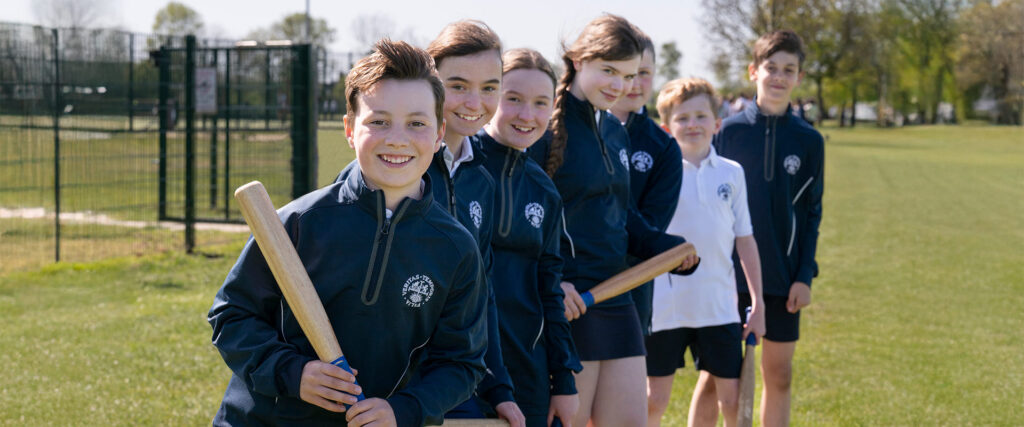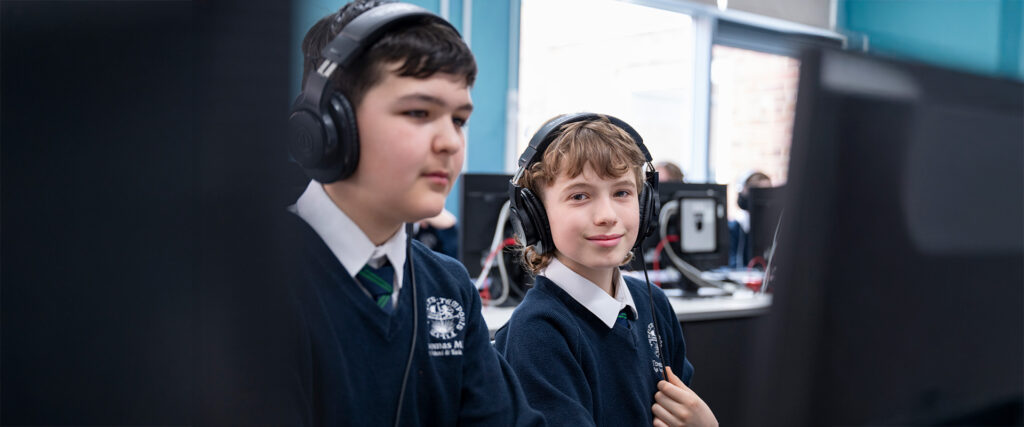
All pupils to have a range of positive (enjoyable) experiences (competitive, creative and challenge-type) and are clear on the benefits (health) and of safe involvement in PE.
For further details about PE at Key Stage 3 or 4, or to discuss your child’s progress, please contact the school office.
The pupils will participate in a range of the listed activities in their single and double lessons typically in blocks of 4 to 6 six weeks.
Knowledge:
Benefits of physical activity.
Key rules.
Basic tactics and strategies.
How to warm-up and cool-down.
Skills:
Fundamental movement skills are focused on, as well as fitness, safety and teamwork.
The pupils will participate in a range of the listed activities in their single and double lessons typically in blocks of 4 to 6 six weeks.
Knowledge:
Benefits of physical activity.
Key rules.
Basic tactics and strategies.
Skills:
Fundamental movement skills are focused on, as well as fitness, safety and teamwork.
Useful Links
See below for a list of National Governing Body Websites which provide information about the individual sports. This includes information about clubs and facilities, how to get involved and the national teams.
National Governing Body Websites
Athletics
England Athletics
Dance
English Amateur Dancesport Association
Badminton
Badminton England
Orienteering
Orienteering England
Basketball
Basketball England
Tennis
Lawn Tennis Association (LTA)
Boccia
Boccia England
Table Tennis
Table Tennis England
Blind Sport
British Blind Sport
Rounders
Rounders England | Rounders
Gymnastics
British Gymnastics
Rugby Union
Rugby Football Union (RFU)
Cricket
England and Wales Cricket Board
Volleyball
Volleyball England
Golf
England Golf
Handball
England Handball Association
Hockey
England Hockey
Netball
England Netball
Bowling
English Indoor Bowling Association
Paralympics
British Paralympic Association
Assessments:
Formative assessments are undertaken throughout the unit of work, with pupils guided on what they are doing well and how to improve. Summative assessment is undertaken at the end of the unit taking into account understanding and performance using a series of ‘I can…….’ statements. They are given an effort grade and attainment grade (Emerging, Developing, Secure and Mastery). All the activities are taken into account when writing end of year reports.
Pupils’ levels of understanding (thinking and decision making) and performance (skills and control) have improved in all curriculum areas.
The pupils will participate in a range of the listed activities in their single and double lessons typically in blocks of 4 to 6 six weeks.
Knowledge:
Understanding of rules, tactical awareness and application are developed; Observation and analysis skills are a focus through peer work.
Skills:
Refinement of sports specific skills.
Pupils are encouraged to lead skills and drills in a range of activities.
The pupils will participate in a range of the listed activities in their single and double lessons typically in blocks of 4 to 6 six weeks.
Knowledge:
Understanding of rules, tactical awareness and application are developed; Observation and analysis skills are a focus through peer work.
Skills:
Refinement of sports specific skills.
Pupils are encouraged to lead skills and drills in a range of activities.
Useful Links
See below for a list of National Governing Body Websites which provide information about the individual sports. This includes information about clubs and facilities, how to get involved and the national teams.
National Governing Body Websites
Athletics
England Athletics
Dance
English Amateur Dancesport Association
Badminton
Badminton England
Orienteering
Orienteering England
Basketball
Basketball England
Tennis
Lawn Tennis Association (LTA)
Boccia
Boccia England
Table Tennis
Table Tennis England
Blind Sport
British Blind Sport
Rounders
Rounders England | Rounders
Gymnastics
British Gymnastics
Rugby Union
Rugby Football Union (RFU)
Cricket
England and Wales Cricket Board
Volleyball
Volleyball England
Golf
England Golf
Handball
England Handball Association
Hockey
England Hockey
Netball
England Netball
Bowling
English Indoor Bowling Association
Paralympics
British Paralympic Association
Assessments:
Formative assessments are undertaken throughout the unit of work, with pupils guided on what they are doing well and how to improve. Summative assessment is undertaken at the end of the unit taking into account understanding and performance using a series of ‘I can…….’ statements. They are given an effort grade and attainment grade (Emerging, Developing, Secure and Mastery). All the activities are taken into account when writing end of year reports.
All pupils have the knowledge and experience to confidently contribute in a positive fashion (in lessons or extra-curricular clubs) in a role of their choice.
The pupils will participate in a range of the listed activities in their single and double lessons typically in blocks of 4 to 6 six weeks.
Knowledge:
The focus is to provide pupils with the opportunity, skills, understanding and confidence to undertake more varied roles involved in Physical Education in addition to performer.
Skills:
Pupils will develop their performance skills as well as coaching and officiating in small groups and conditioned situations.
The pupils will participate in a range of the listed activities in their single and double lessons typically in blocks of 4 to 6 six weeks.
Knowledge:
The focus is to provide pupils with the opportunity, skills, understanding and confidence to undertake more varied roles involved in Physical Education in addition to performer.
Skills:
Pupils will develop their performance skills as well as coaching and officiating in small groups and conditioned situations.
Useful Links
See below for a list of National Governing Body Websites which provide information about the individual sports. This includes information about clubs and facilities, how to get involved and the national teams.
National Governing Body Websites
Athletics
England Athletics
Dance
English Amateur Dancesport Association
Badminton
Badminton England
Orienteering
Orienteering England
Basketball
Basketball England
Tennis
Lawn Tennis Association (LTA)
Boccia
Boccia England
Table Tennis
Table Tennis England
Blind Sport
British Blind Sport
Rounders
Rounders England | Rounders
Gymnastics
British Gymnastics
Rugby Union
Rugby Football Union (RFU)
Cricket
England and Wales Cricket Board
Volleyball
Volleyball England
Golf
England Golf
Handball
England Handball Association
Hockey
England Hockey
Netball
England Netball
Bowling
English Indoor Bowling Association
Paralympics
British Paralympic Association
Assessments:
Formative assessments are undertaken throughout the unit of work, with pupils guided on what they are doing well and how to improve. Summative assessment is undertaken at the end of the unit taking into account understanding and performance using a series of ‘I can…….’ statements. They are given an effort grade and attainment grade (Emerging, Developing, Secure and Mastery). All the activities are taken into account when writing end of year reports.
Pupils specialise in their chosen roles showing a desire to improve their expertise and competence. The pupils have identified the activities and roles that they will continue beyond KS4 as independent learners committed to healthy active lifestyles and possess the stamina, suppleness and strength to do so.
The pupils will participate in a range of the listed activities in their single and double lessons, typically in blocks of 4 to 6 six weeks.
Knowledge:
Pupils are encouraged to identify pathways and the roles they are interested in, and are guided by the teacher in the delivery of the units of work; ultimately gaining the knowledge and understanding to take responsibility for the majority of the aspects of their lessons.
Skills:
Pupils to take responsibility and lead their peers, in practices, organising equipment, teams and competitions.
The pupils will participate in a range of the listed activities in their single and double lessons, typically in blocks of 4 to 6 six weeks.
Knowledge:
Pupils are encouraged to identify pathways and the roles they are interested in, and are guided by the teacher in the delivery of the units of work; ultimately gaining the knowledge and understanding to take responsibility for the majority of the aspects of their lessons.
Skills:
Pupils to take responsibility and lead their peers, in practices, organising equipment, teams and competitions.
Useful Links
See below for a list of National Governing Body Websites which provide information about the individual sports. This includes information about clubs and facilities, how to get involved and the national teams.
National Governing Body Websites
Athletics
England Athletics
Dance
English Amateur Dancesport Association
Badminton
Badminton England
Orienteering
Orienteering England
Basketball
Basketball England
Tennis
Lawn Tennis Association (LTA)
Boccia
Boccia England
Table Tennis
Table Tennis England
Blind Sport
British Blind Sport
Rounders
Rounders England | Rounders
Gymnastics
British Gymnastics
Rugby Union
Rugby Football Union (RFU)
Cricket
England and Wales Cricket Board
Volleyball
Volleyball England
Golf
England Golf
Handball
England Handball Association
Hockey
England Hockey
Netball
England Netball
Bowling
English Indoor Bowling Association
Paralympics
British Paralympic Association
Assessments:
Formative assessments are undertaken throughout the unit of work, with pupils guided on what they are doing well and how to improve. Summative assessment is undertaken at the end of the unit taking into account understanding and performance using a series of ‘I can…….’ statements. They are given an effort grade and attainment grade (Emerging, Developing, Secure and Mastery). All the activities are taken into account when writing end of year reports.
In line with the OCR GCSE PE syllabus, pupils will:
Homework is often set on the Everlearner platform, which can be accessed anytime for revision or extra practice.
Knowledge:
Characteristics of skilful movement
Classification of skill
Goalsetting
Mental preparation
Types of guidance
Types of feedback
Useful Links
Characteristics of skilful movement – BBC Bitesize
Classification of movement skill – BBC Bitesize
Goal setting – Goal setting – BBC Bitesize
Mental preparation – BBC Bitesize
Guidance in sport -BBC Bitesize
Types of feedback – BBC Bitesize
Knowledge:
Physical activity and sport in the UK
Skills:
PEEL – Learn and understand technical terminology and concepts to then be able to make a Point, Explain, provide a relevant Example and Link to the question.
Assessments:
End of topic 2.2 test utilising exam style questions.
End of practical units assessments using the assessment criteria.
Knowledge:
Current trends in participation
Factors affecting participation
Strategies to promote participation
Analysis of participation data
Knowledge:
Health benefits of physical activity
Consequences of sedentary lifestyle
Analysis of health-related data
Diet and nutrition – components of a healthy balanced diet
Effects of diet and nutrition on energy use in physical activity
Skills:
PEEL – Learn and understand technical terminology and concepts to then be able to make a Point, Explain, provide a relevant Example and Link to the question.
Useful Links
Health and wellbeing in sport – OCR – GCSE Physical Education Revision – OCR – BBC Bitesize
Diet and nutrition – BBC Bitesize
Assessments:
End of topic 2.1 test utilising exam style questions, and end of practical unit assessments using the assessment criteria.
Knowledge:
Analysis of health-related data
Diet and nutrition – components of a healthy balanced diet
Effects of diet and nutrition on energy use in physical activity
Skills:
PEEL – Learn and understand technical terminology and concepts to then be able to make a Point, Explain, provide a relevant Example and Link to the question.
Assessments:
End of topic 2.3 test utilising exam style questions, and end of practical unit assessments using the assessment criteria.
Knowledge:
Trends in participation in physical activity and sport in the UK.
Factors affecting participation.
Strategies to promote participation.
Physical, emotional and social health benefits of physical activity and consequences of a sedentary lifestyle.
Skills:
PEEL – Learn and understand technical terminology and concepts to then be able to make a Point, Explain, provide a relevant Example and Link to the question.
Useful Links
Participation in sport and influencing factors – Social groupings and participation in sport – BBC Bitesize
Assessments:
End of topic 2.1 test utilising exam style questions.
End of practical units assessments using the assessment criteria.
Knowledge:
Analysis of health, fitness and wellbeing data.
Diet and nutrition
Definition and components of a balanced diet.
Effect of diet and hydration on energy use in physical activity.
Structure and function of the cardiovascular system.
Pulmonary and systemic circulatory systems.
Role of red blood cells and pathway of blood.
Stroke volume, heart rate, cardiac output.
Structure and function of the respiratory system.
Pathway of air.
Mechanism of breathing (role of respiratory muscles).
Skills:
PEEL – Learn and understand technical terminology and concepts to then be able to make a Point, Explain, provide a relevant Example and Link to the question.
Useful Links
Health and wellbeing in sport – OCR – GCSE Physical Education Revision – OCR – BBC Bitesize
Cardiovascular system – OCR – BBC Bitesize
The Functions Cardiovascular system -OCR – BBC Bitesize
Assessments:
End of topic 2.3 test utilising exam style questions, and end of practical unit assessments using the assessment criteria.
Year 10 preparatory exams.
Knowledge:
Respiratory system continued….
Tidal volume, breathing rate and minute volume.
Gaseous exchange.
Link between cardiovascular system and respiratory system.
Effects of exercise (responses and adaptations).
Aerobic and anaerobic exercise.
Impact of intensity and duration of exercise.
Coursework:
This component draws upon the knowledge, understanding and skills a student has learnt and enables them to analyse and evaluate their own or a peer’s performance in one activity. Practical and computer room lessons will be dedicated in the second half of term.
Skills:
PEEL – Learn and understand technical terminology and concepts to then be able to make a Point, Explain, provide a relevant Example and Link to the question.
Coursework:
Conduct fitness tests applying protocol.
Analyse aspects of personal performance in a practical activity.
Evaluate the strengths and weaknesses of the performance.
Produce an action plan which aims to improve the quality and effectiveness of the performance.
Useful Links
Structure of the respiratory system OCR – BBC Bitesize
Respiratory system – OCR – BBC Bitesize
Coursework guidance: OCR GCSE (9-1) Physical Education J587 Guide to Non-exam Assessment (NEA) – Version 4.8 (January 2025)
Assessments:
End of topic 1.1 test utilising exam style questions, and end of practical unit assessments using the assessment criteria.
Knowledge:
Diet:
Definition of a balanced diet.
Components of a balanced diet.
Effect of diet and hydration on energy use for different activities.
Useful Links
Diet and nutrition OCR – BBC Bitesize
Diet and physical activity-BBC Bitesize
Current trends in participation based upon social groups.
Current trends of participation in different physical activities and sport.
Factors affecting participation.
Strategies to promote participation.
Participation data analysis.
Useful Links
Recap of previously taught topics and completion of related coursework sections:
Skill classification and skill continuums.
Muscles, joints and movements.
Principles and methods of training and goalsetting.
Risk/ hazard assessment and injury prevention.
Skills:
PEEL – Learn and understand technical terminology and concepts to then be able to make a Point, Explain, provide a relevant Example and Link to the question.
Coursework skills:
Analyse aspects of personal performance in a practical activity.
Evaluate the strengths and weaknesses of the performance.
Produce an action plan which aims to improve the quality and effectiveness of the performance.
Assessments:
Year 11 preparatory exam.
2.1 Physical activity and sport in the UK topic test.
End of practical units assessments using the assessment criteria.
Knowledge:
Role and influence of the media.
Golden triangle; relationship between sport, media and sponsorship (positives and negatives).
Useful Links
Elite sport, the media and sponsors – Commercialisation – BBC Bitesize
The golden triangle -BBC Bitesize
The effects of the media on sport – Commercialisation in sport – BBC Bitesize
Distinction between sportsmanship and gamesmanship.
Deviance in sport.
Drugs in sport.
Violence in sport.
Revision:
A structured revision programme covering all the taught content, exam technique and practise questions/ papers.
Skills:
PEEL – Learn and understand technical terminology and concepts to then be able to make a Point, Explain, provide a relevant Example and Link to the question.
Useful Links
Sporting behaviour- BBC Bitesize
Performance-enhancing drugs -BBC Bitesize
Assessments:
Year 11 preparatory exams.
End of topic 2.1b Commercialisation test and 2.1c Ethics in sport test, utilising exam style questions.
Students will be assessed in their chosen 3 sports and assigned final practical marks out of 20 using the assessment criteria.
Coursework will be internally marked and moderated.
Knowledge:
A structured revision programme will continue covering all the taught content, exam technique and practise questions/ papers.
Skills:
PEEL – Learn and understand technical terminology and concepts to then be able to make a Point, Explain, provide a relevant Example and Link to the question.
Assessments:
Practical and written coursework to be externally moderated by the exam board.
Final GCSE formal exams.
Sport, health, fitness or factors that affect performance?
Physiotherapy, fitness/personal training, PE teaching, sports analysis, services
Mr M Harding